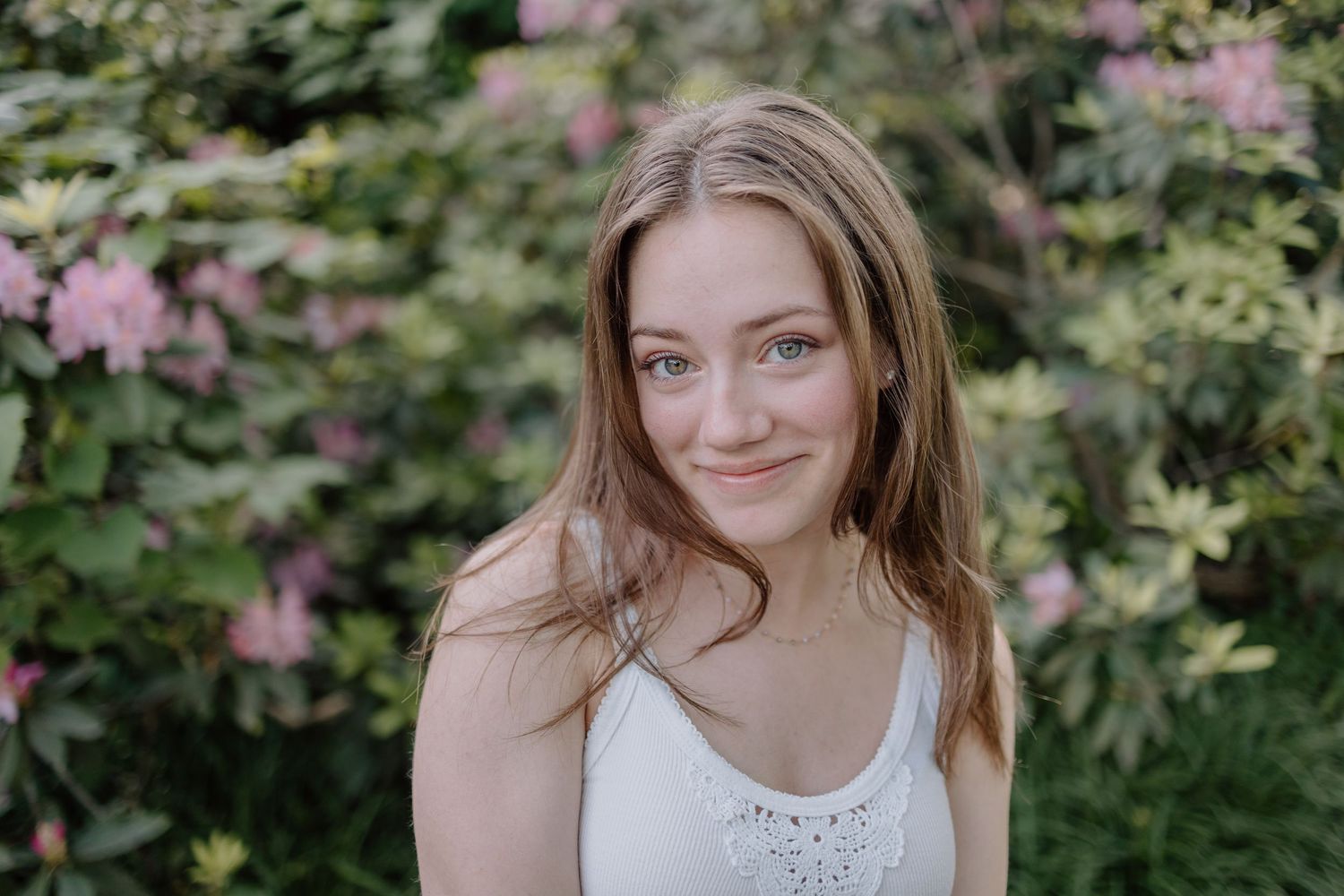

Just a heads up, the ADHD in me LOVES to tell stories in great detail and give a lot of probably unnecessary side notes, so buckle up, speed read, or skip it over entirely - I'll understand, lol.
My Life Before
How do I start? I don't want to give you my entire life backstory, but I want you to get a sense of who I was. I was a really hard worker - in fact, it was my identity; productivity was worth. I grew up doing a million hard things at once and doing them perfectly. I had to. It's just who I was.
At that time, I was in my fourth year of Undergraduate School at Eastern Washington University - a Psychology Major - working on my Bachelor's Degree. I was excelling in all of my classes. Simultaneously, I was working part and full-time as an aide and admin at a physical therapy clinic. I was living with my boyfriend at that time (my husband now), making a home. I planned to finish my degree, get into a Graduate program, and start working on my PhD to become a Clinical Psychologist... that leads you into the day it happened.
The Day My Life Changed
Before entering a Graduate program (aside from applying, being interviewed, etc. for specific programs), you have to take a test called the GRE to assess your readiness. That day was the day I took that test. I prepared for it for months (weeks? I was a procrastinater so I don't remember) and was stressed out of my mind, obviously. I arranged everything perfectly - there was no one home, the test would be a set number of hours, it would be proctored, my webcam was set up, etc. I took the test. It was one of the most stressful moments of my life, but as you'll read later, we'll declare it the most stressful day of my life, too. Well, when the test was over and I got my score back and there was nothing I could do about it anymore, there was no reason to stress - that part was over. I scored average for my major if it matters.
After that, I gathered up some things - my [husband] and I were going to visit my family about 1.5 hours away. We sat down for dinner with them. We were telling these great and amazing stories about how crazy our downstairs neighbor was - that's a story for a whole other time. Then, suddenly I was waking up on the floor. I didn't know I was on the floor, though. Or what was happening. There was a lot going on and I'll spare you the details because they're pretty tear-worthy. I had had a seizure. My first ever, with no family history. Completely out of the blue. Obviously, I rode in an ambulance straight to the ER, they sent me home because nothing else seemed wrong with me, and I went home to my Dad's to spend the night. Remember when I said I was a hard worker? I texted my boss and said I'd probably miss a day of work because I had a seizure, but I'd be back the day after. To me, that seemed normal. Her mind was blown. I did take a few more days and then went back to work like normal. Well, a single day of working like "normal". My second day back to work, on the drive there, my vision seemed to change, so I got to go to the ER again. This time, they noticed that I had no balance whatsoever - I couldn't walk on a straight line without falling, not even a little. So, I was told I couldn't go back to work until I was cleared... and I never got cleared again.
My Diagnoses and What They Mean
It took quite a few doctors and months of tests, therapy, clinic visits, seeing other doctors, to come to the conclusion that I had had a seizure that subsequently caused a non-Traumatic Brain Injury (nTBI), Postural Orthostatic Tachycardia Syndrome (POTS), some visual defecits or disorders, and what would eventually become the diagnosis of Epilepsy (Juvenile Myoclonic Epilepsy, JME). At that time, I had only had the one seizure and was not technically diagnosed with Epilepsy until further down the road.
To save you some Google-ing, POTS is an autoimmune disorder or dysautonomia that causes my blood pressure to drop and my heart rate to spike, depending mostly on posture (lying down, sitting, standing, walking, bending over, etc.) and a few other factors (such as heat, exercise, etc.). Some spicy symptoms that come along with that are feeling lightheaded, dizzy, faint, throwing up, absolute fatigue, and some other fun stuff.
My nTBI isn't so easily definable, but I'll put it to you simply - I couldn't continue school, which was earth-shattering to me. I couldn't work - at a desk, moving around, any advanced thinking, simple math, long conversations - all of these were lost to me. I couldn't function normally for more than an hour or so without facing the consequences - migraines, throwing up, not being able to see properly or think normally, etc. I wasn't even a shell of the person I used to be. I used to blindfold myself in the car.
My first seizure happened in October of 2021. After finding treatments for my health conditions, I tried to go back to a "normal" life again. I wasn't working, but I was trying to drive again (extremely difficult, but I got back to it), being social when I could... I was two classes short of finishing my degree, so I decided to take them one at a time - a quarter each - and with all of the assistance from the school, I eventually finished. However, when my life seemed to find a rhythm, in June of 2023, I had another seizure. This one was even more confusing. We couldn't chalk it up to an overload of stress like we had with the first. Then, in July, I had another. Another in August, and three more in October. What a year. I was seeing a Neurologist (among a million other specialists) at the time and was then diagnosed with JME.
Some days are really good. Good enough that I start to gaslight myself into thinking I've made it all up in my head. Other days are really bad, bad enough that I needed help getting dressed, walking across the house, and other really, really simple tasks we take for granted. Most days are somewhere in between. I seriously couldn't do any of it without the support I have.
My Life Now - How do I...?
I grew up loving photography and sharing that hobby with my Dad. I loved photographing people, but had done it very little. It was an underlying passion of mine that I wanted to do more. Ironically, I was inspired by my wedding photographer to actually pursue it. I'll never forget that moment. Well, I stopped driving again, but I started doing a few sessions anyway (I got to be passenger princess). I got some better gear, practiced a lot more... I ended up really liking it because of how flexible this job is. For sessions, I'm really only working for about an hour at a time. Then for editing, I can do as much or as little of it as I need to or can, depending on how I feel. If I "overdo it", then I have time to rest. I make my own schedule. It's nothing like any other kind of job. I got invited to second-shoot a few weddings. That was really hard. I did a maximum of about 6 hours, all in the heat, and all I can say is that I survived. I took breaks when I could and purposefully planned to take the next 3-4 days completely off to rest and recover. I did it. I really did it. So, I found my true calling. I know better than to work full weddings, especially by myself, but I certainly know my limits.
When my husband and I started telling people that we were going to have a baby, I got some backlash asking, "well if I can't function normally or take care of myself, how am I going to take care of a baby?" and other similar questions. Although slightly backhanded, they were really good questions. I wasn't even really sure at first, I just knew it was something I wanted bad enough that I was going to have to work hard and find out. To start, I am on treatments and medications now, which help me regulate as much as they can. I know a lot about myself now, my disorders, and other patterns that help me predict how I'm going to feel and what I should or shouldn't do. Other than that, it's really hard, and anxiety-inducing as you can imagine. Just like literally any other stay at home mom would tell you. It's exhausting. But I love it. I love it so much. It was the gift that I never knew I could have. I planned to work in a clinic as a Clinical Psychologist and see patients... work normally... and not stay at home to raise my baby and spend endless moments with him. I'm truly blessed. I get a lot of help from friends and a LOT of support from my husband. He picks up where I fall short and never makes me feel guilty about it.
What's Been the Hardest + How I Cope
Well, my mental health definitely had her moment - I had to have an entire identity-shift. My worth has nothing to do with my productivity, or even my ability. My true self is revealed in how I carry myself and how I treat others, My worth is in how Jesus sees me. I had to reframe my thinking from "why can't I (...) like normal people" to "I'm not normal". My abilities are different. Because my disability isn't really something you can see unless you're deep in my personal life, I've had people not understand me, not believe me, not see me, and that's okay. They assume that since I'm able to drive occasionally or be a photographer, I must be just fine. I've had to come to terms with accepting that I can't control how other people view me. I know how hard I work to appear or try to feel normal, I know how I truly feel, and that's all that matters.
In all of this, I'm still growing and learning, finding my voice. My disability is real, and I don't have to defend it.
The Reason I'm Telling You This
It's really important for you to know that not all disabilities are clearly visible. I'm sure there are many people in your life walking with health conditions you know nothing about or even just fighting silent battles. My hope is that you'll find kindess to give them, without assumptions or hesitations. People struggling with autoimmune disorders, epilepsy, other silent illnesses, I see you and I'm here with you. Mental health is a special kind of battle that can feel extremely isolating. I'm your girl. If all of this information is completely new to you, feel free to ask me any question in the world, it won't offend me and I'd love to tell you.